Iberamia 2026 Career Recognition Award talk
Constrained Decision-Making in the Age of Generative AI

Prof. Miguel A. Salido
Full Professor
Editor of Inteligencia Artificial, Iberoamerican Journal of Artificial Intelligence
Abstract. Recent advances in generative AI have transformed the way humans interact with machines. Large Language Models can write, explain, translate, converse and assist users in formulating complex tasks. However, many real-world AI problems are not only language problems: they are constrained decision-making problems, where solutions must satisfy hard constraints, optimize scarce resources, adapt to changing requirements and remain understandable to users.
This talk will use scheduling as a guiding example to discuss the limits and opportunities of LLMs in constrained decision-making. Scheduling is easy to describe but difficult to solve reliably: a schedule that looks reasonable may violate precedence constraints, resource capacities or operational requirements. This makes scheduling a useful lens through which to examine why LLMs should not be treated as reliable solvers, but rather as powerful interfaces for modelling, interaction, explanation and recourse. The talk will argue that the future of reliable AI lies in hybrid architectures that combine LLMs, constraint-based solvers, machine learning models, graph neural networks, verification mechanisms and explanation layers. In this vision, LLMs help users express intentions and understand results, solvers preserve feasibility, learning models guide the search, checkers verify correctness, and explanations support trust and decision-making. The talk will also reflect on the role of the Ibero-American AI community in developing AI systems that are not only fluent, but verifiable, useful and responsible.
Short Bio: Miguel Angel Salido Gregorio is Full Professor at the Universitat Politècnica de València, Spain. His research focuses on Artificial Intelligence, constraint satisfaction and optimization, planning, scheduling, metaheuristics, intelligent manufacturing systems, energy efficiency and sustainability, with current interests in sustainable scheduling, learning-guided search, explainable optimization and hybrid AI systems for reliable decision-making under constraints. He has participated in numerous national and international research projects and networks, including European, national and regional projects, and has also been involved in knowledge-transfer projects with the productive sector. His scientific production includes more than 180 research publications, with more than 80 indexed in quality-ranked venues such as JCR journals and CORE conferences, as well as books and book chapters published by international publishers. He has served on the programme committees of major Artificial Intelligence conferences, including IJCAI, AAAI, ECAI, ICAPS and CP-DP. He has also contributed to research evaluation activities for several national and international agencies, including the European Commission, ANEP, the Czech Science Foundation and FONDECYT.
He is currently Editor-in-Chief of Inteligencia Artificial, the Iberoamerican Journal of Artificial Intelligence, an international open-access journal promoted and sponsored by the Iberoamerican Society of Artificial Intelligence (IBERAMIA).
Artificial Intelligence for Child Protection / Inteligencia Artificial para la Protección de Menores
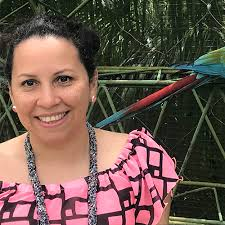
Ana Lucila Sandoval Orozco
Grupo de Análisis, Seguridad y Sistemas (GASS)
Dpt. de Ingeniería del Software e Inteligencia Artificial
Abstract. Digital transformation has vastly expanded opportunities for learning, participation, and socialization for children and adolescents. However, it has also increased their exposure to risks such as grooming, sextortion, the dissemination of child sexual abuse material, cyberbullying, online sexual exploitation, and other forms of violence facilitated by digital technologies. Against this backdrop, Artificial Intelligence is emerging as a key tool to strengthen prevention, detection, investigation, and response efforts regarding these threats. This talk will present how AI-based technologies can contribute to creating safer digital environments through the early identification of risk patterns, automated analysis of illicit content, detection of behaviors associated with grooming and sextortion, and the strengthening of reporting mechanisms and victim support systems. It will also address innovative solutions developed through international child protection initiatives, including mobile applications, awareness-raising platforms, digital investigation tools, and specialized training programs for professionals and the general public. These initiatives foster a coordinated response grounded in prevention, investigation, and victim assistance. In addition to exploring the opportunities AI offers for child safety, the presentation will reflect on the ethical, legal, and privacy challenges associated with its use, highlighting the need to develop technologies that are trustworthy, transparent, and centered on children’s rights. The aim of the talk is to demonstrate how combining technological innovation, multidisciplinary cooperation, and a child-protection focus can strengthen the digital resilience of new generations and contribute to a safer, more inclusive cyberspace for all.
Short Bio: Ana Lucila Sandoval Orozco holds her PhD in Computer Engineering in Universidad Complutense de Madrid and serves as an Assistant Professor in the Department of Software Engineering and Artificial Intelligence. She is also a member of the Analysis, Securit
Machine Learning in Biomedicine: From Disease Gene Prediction to Drug Generation

Prof. Alberto Paccanaro
School of Applied Mathematics (EMAp)
Fundação Getulio Vargas (FGV). Rio de Janeiro
Department of Computer Science at Royal Holloway
University of London
Abstract. A cell can be viewed as a set of complex networks of interacting biomolecules, and genetic diseases can be understood as the result of abnormal interactions within these networks. In this talk, I will present novel machine learning algorithms developed in our lab to model and predict biological interactions and address problems in network medicine and systems pharmacology.
I will begin by describing a method to quantify distances between disease modules on the human interactome using only disease phenotype information. I will then show how this measure can be used in a semi-supervised learning algorithm to predict genes associated with hereditary diseases, even when no disease genes are previously known. Building on this work, I will present preliminary results from our ongoing efforts to extend this approach using modern deep learning techniques. We are combining transformer-based language models, ontology-based representations, and graph neural networks to learn disease representations from multiple sources of phenotypic information and improve disease gene prediction. Finally, turning to pharmacology, I will present a novel deep learning approach for protein-targeted drug generation that explicitly considers target selectivity. Unlike existing methods, which largely neglect off-target interactions, our approach introduces a new training objective that promotes selectivity by separating the distributions of on-target and off-target binding affinities. This objective is incorporated into a variational autoencoder-based generative model that learns drug and protein representations whose distances reflect differences in binding affinity. Our results show improvements over the state of the art in predicted binding affinity, selectivity, and molecular quality.
Short Bio: Alberto Paccanaro is Full Professor at the School of Applied Mathematics (EMAp) at FGV in Rio de Janeiro, and in the Department of Computer Science at Royal Holloway, University of London. He completed his undergraduate studies in Computer Science at the University of Milan and received his PhD from the University of Toronto in 2002, specializing in machine learning under the supervision of Geoffrey Hinton. From 2002 to 2006, he was a postdoc in Mansoor Saqi’s lab at Queen Mary University of London and in Mark Gerstein’s lab at Yale University. In 2006, he joined Royal Holloway, University of London, as a Lecturer, and in 2014 he became Full Professor of Machine Learning and Computational Biology as well as Director of the Centre for Systems and Synthetic Biology. He has been visiting professor at Cornell, Yale, the University of Venice and the Catholic University of Asuncion in Paraguay. He leads several international collaborations together with academics at Yale, Cornell and the University of Milan. His work focuses on developing machine learning algorithms to address complex problems in molecular biology, medicine, and pharmacology. More information about his research can be found on his lab website: https://paccanarolab.org/.